

First described by epidemiologist Richard Peto in 1977, Peto’s Paradox raises one of the most intriguing questions in biology:
Why don’t organisms with more cells and longer lifespans have higher-than-expected rates of cancer?
In theory, as the number of cells increases, so does the probability of DNA replication errors that can lead to cancer. However, the incidence of cancer in elephants, whales, and other large mammals does not match this expectation. This is because these species have evolved powerful tumor-suppressive mechanisms that help protect them against cancer.
Cancer Protection Mechanisms in Elephants
Compared with humans, elephants have approximately 20 times more copies of the TP53 gene. Known as the “guardian of the genome,” TP53 detects DNA damage, halts the cell cycle, promotes DNA repair, and, when necessary, directs damaged cells to undergo apoptosis.
In addition, the LIF6 (Leukemia Inhibitory Factor 6) gene found in elephants contributes to the rapid elimination of cells carrying severe DNA damage, thereby reducing the risk of cancer development.
Similarly, in blue whales and other large marine mammals, the activity of tumor suppressor genes such as PTEN and CDKN2A is particularly noteworthy. These genes help maintain genomic stability by regulating cell proliferation.
Why Is It Important for Cancer Research?
Understanding the molecular mechanisms underlying Peto’s Paradox may contribute to a better understanding of cancer biology in humans and support the development of new diagnostic and therapeutic strategies.
In particular, investigating the regulatory mechanisms of genes such as TP53, LIF6, PTEN, and CDKN2A represents an important area of research for the development of targeted therapies, biomarkers, and early diagnostic approaches.
In addition, liquid biopsy technologies based on the analysis of cell-free DNA (cfDNA) and microRNAs (miRNAs) are playing an increasingly important role in the early detection of cancer, monitoring treatment response, and assessing minimal residual disease.
Support Your Cancer Research with Letgen Biotechnology
Reliable cancer research depends on high-quality sample preparation, sensitive analysis, and the right molecular tools.
At Letgen Biotechnology, we provide researchers with the following solutions:
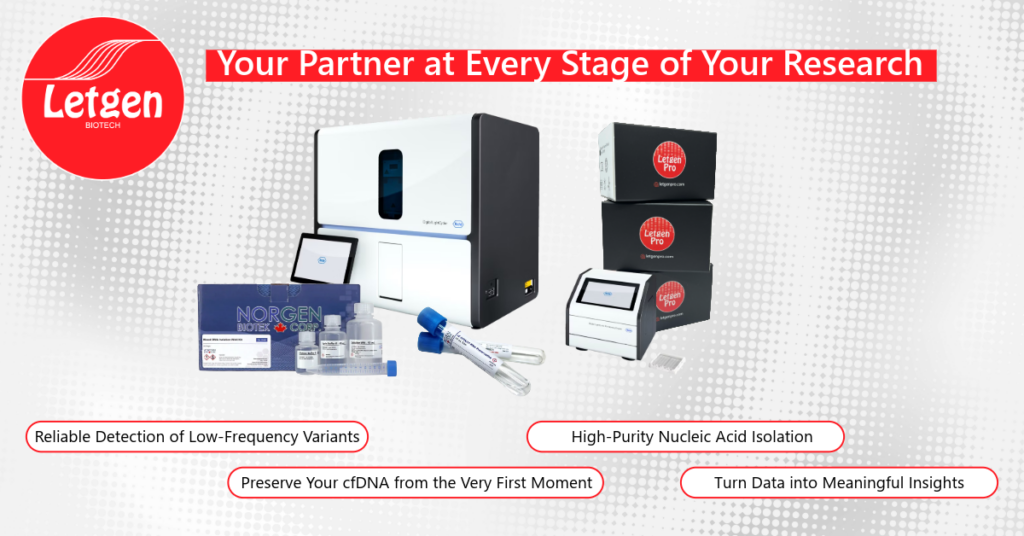
- Norgen cf-DNA Preservation Tubes: Ensure the stable preservation of cell-free DNA during sample collection and transportation.
- Roche Digital PCR Systems: Enable highly sensitive detection of low-frequency tumor biomarkers and support minimal residual disease (MRD) studies.
- Norgen RNA/DNA Isolation Kits: Provide high-quality nucleic acid isolation from a variety of sample types, including tissue, plasma, and cell cultures.
- NGS and Bioinformatics Services: Enable comprehensive analysis of genetic variants, gene expression profiles, and molecular pathways.
Discover Letgen Biotechnology’s solutions to support your cancer research with advanced molecular technologies.
Don’t forget to follow us and subscribe for the latest biotechnology news and industry insights!
Resources:
- Peto, R. (2015). Quantitative implications of the approximate irrelevance of mammalian body size and lifespan to lifelong cancer risk. Philosophical Transactions of the Royal Society B: Biological Sciences, 370(1673), 20150198.
- Abegglen, L. M., et al. (2015). Potential Mechanisms for Cancer Resistance in Elephants and Comparative Cellular Response to DNA Damage in Humans. JAMA, 314(17), 1850–1860.
- Tollis, M., Schiffman, J. D., & Boddy, A. M. (2017). Evolution of cancer suppression as revealed by mammalian comparative genomics. Current Opinion in Genetics & Development, 42, 40-47.